
Located in Mount Holly New Jersey, this site was where the Battle of Iron Works Hill took place in December 1776 .
Since moving to the Mount Holly area, we have explored a number of historic sites. If you have watched our YouTube channel then you have seen a number of our meanders. We have checked out Burlington County’s trolls such as Big Rusty in Hainesport, and Woody in the Rancocas Woods. Another local exploration was of “The Mount,” which highlighted not only Revolutionary War history, but stories of the Jersey Devil as well.
We have explored Historic Smithville, Mount Holly Historic District, Mill Race Village, Mount Holly Cemetery, Burlington County Lyceum, Prison & several more sites, but it wasn’t until this past week that our meanders started to really zoom in on a more granular level with the idea of our country’s beginnings. Maybe it was the sense of disconnection, but it wasn’t until Jessie and I went to St. Andrews Cemetery this past week, that really brought what was fought for and what remains at risk into focus.
St. Andrews Cemetery, part of where the Revolutionary War took place, has been on our bucket list for sometime. Not only as an old historic cemetery, but the area served as a pivotal moment in the War with the Battle of Iron Works Hill.


The Battle of Iron Works Hill was fought 22–23 December 1776. The American militia, under Col. Samuel Griffin, drew Hessian and British forces under Carl von Donop to Mount Holly, helping keep Donop away from Trenton before Washington’s attack. St. Andrew’s church notes the same basic account and identifies the force as American militia versus Hessian mercenaries and British regulars.
The above image as described in the caption is a satellite view of the area we are discussing. On the right hand you will see Pine Street with the road that leads into the cemetery toward the “128 Pine St,” address. We parked our car just beyond the Church in the back of the property and started our walkabout from there. The Geo tag for Iron Works Hill is part of the area where the Battle took place. Oddly enough, Google doesn’t mention the cemetery, although if you zoom in, headstones are just barely visible as white or grey specks on the landscape.
We’d like this article & attached video to serve as an overview of the cemetery, historical markers and memorials.

Any Map application like Apple or Google, will take you to the Cemetery entrance on Pine Street via 128 Pine Street, which is a residence just within the cemetery. This residence I believe is the caretaker, I do not know, but do be mindful it is private and the road is rather narrow. As you follow the road up, there will be a left turn and a route to go straight and around. We took it to the back and parked in the shade on the lawn away from the graves just beyond a maintenance shed and some mounds of chipped wood.
From our vantage point we noticed some areas around graves with tall grass. We took our bug spraying precautions and ventured along the right side on our first visit, but we went toward the middle and down the left side on our second visit. One of the first things we notice there are a good number of broken headstones, flat, ledger, and chest markers. If you unfamiliar with these terms they are large headstones that lay flat along the ground, or are slightly above ground structures of varied shapes.
Depicted below is one such example.

Now it is completely understandable there are various reasons this kind of damage occurs, and that there may not be a viable budget to do large scale repairs to everything. A few of the headstones that belong to Revolutionary War Veterans have metal historical plaques holding them together. But, some of the damage seemed suspicious and one gravestone had clear indications of tire tracks from a dirt bike or something similar. Many of the broken gravestones, as noted in the photo above, seemed smashed as if with great force. Not merely broken due to weathering.
Another note we made meandering throughout the cemetery are the amount of veterans from various wars at rest throughout St. Andrew’s. The side of the cemetery closest to the chapel seemed to have a concentration of Revolutionary War veterans, while the middle seemed to have more Civil War veterans. The farthest end, on the side where we parked, away from the chapel, had veterans of 20th century wars.

From Find a Grave: Civil War Union Soldier. He was enrolled in the 3rd New Jersey Volunteer Infantry on May 27, 1861, and was mustered in as a Private in Company H on June 1, 1861. He served until he was discharged due to disability at New York City on October 7, 1862, and died a few weeks later.
Prior to this visit, I did not know what “GAR” meant, clearly seen on the medallion citing the years of the Civil War, so I looked it up. The Grand Army of the Republic (GAR) was a powerful fraternal organization formed in 1866 by Union Civil War veterans, which operated until its last member died in 1956.

As part of the pre-Civil War New Jersey Militia William Irick achieved the rank of General as evident on the monument marking his grave. Nearby are other members of the prominent Irick family. If you have driven near or on Irick Drive in Westhampton New Jersey this is the family it was named after.
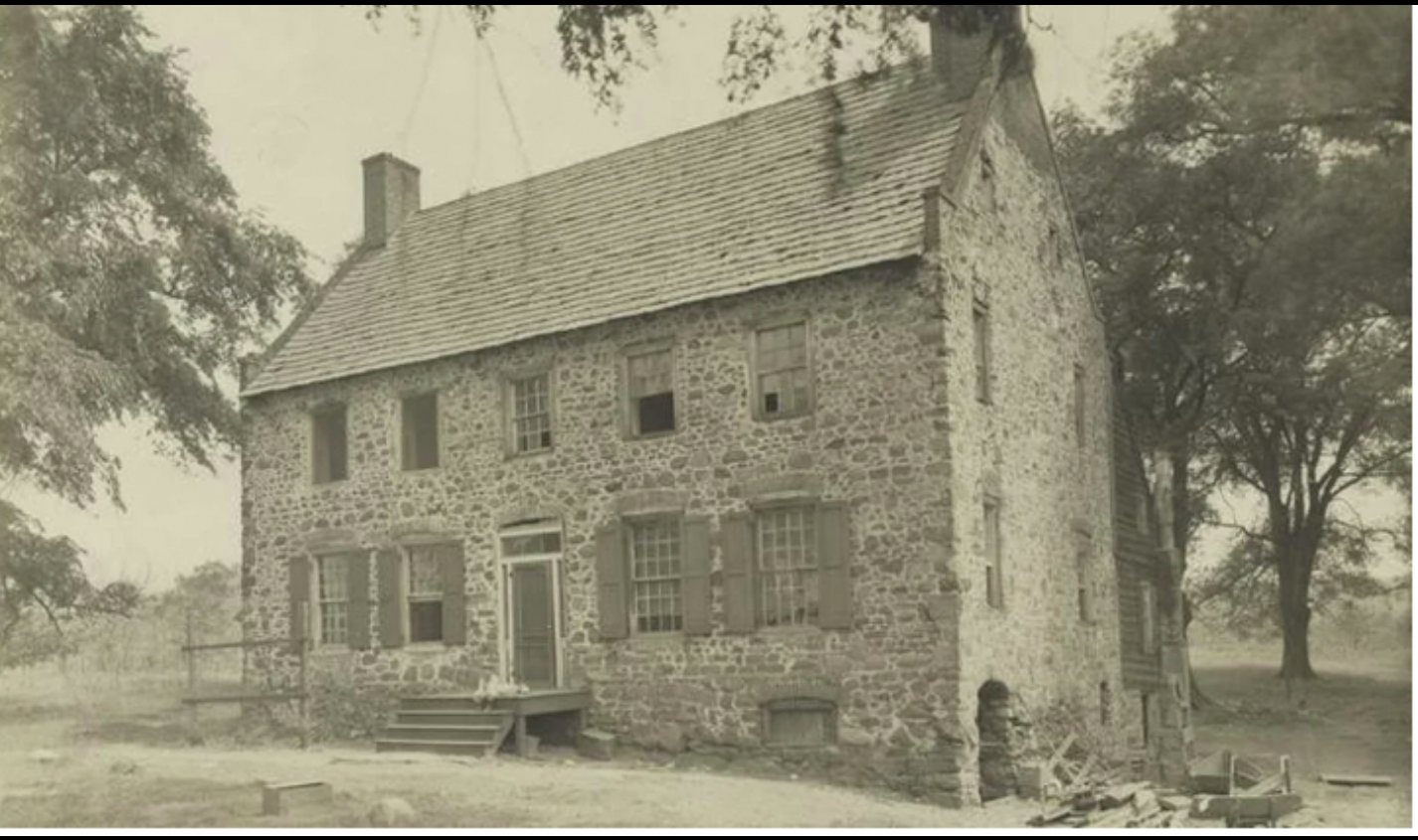
If you walk to your left from the area we parked, or in the rear right of the cemetery is a stone marker that states: “The Original Site of St. Andrew’s Church Erected A.D. 1742.”

From the St. Andrew’s Cemetery Website:
Established in 1742, St. Andrew’s Graveyard received it’s royal charter from King George III in 1765, while Benjamin Franklin’s son, William, was Governer of New Jersey. The original Church of St. Andrew’s was located on the land that is now the site of the cemetery.
The newer Church not to far from where this monument is sits beautifully amongst the trees. If you zoom in to see this picture, or watch our video below you will see how the original was depicted. It appears as if those responsible wish to recapture that serene, quiet atmosphere it offers.


Since we are over 50 we tend not to take each day of life for granted. Many of those interred at St. Andrew’s lived lives into their 90’s. Yet, many did not as a fair amount passed at a young age, younger than we are today. There are more than a handful of children buried here as well. At the time we know life expectancy was not as it is today. However, it adds a somber layer to the atmosphere having this large mix of Veterans dying in combat, and young children passing from ill health, disease, and other ailments.
The earliest burial on this property according to Find a Grave is Thomas John Antrim. This gentleman was born 30 September 1686 and interred 24 November 1732. Antrim was aged 46 when he passed, about nine years before the usual 1742 establishment date for St. Andrew’s Graveyard. The Antrim genealogical account identifies him as a Quaker-family figure born in Burlington County, married in Springfield, living in Springfield, and leaving a will in 1732.
We did not get a picture of his headstone, but according to Find A Grave, it bears no dates upon it, just his name. In trusting the contributor of having done their research, this would put Mr. Antrim as the first burial on the property as noted earlier. In finding out this piece of data the question of what this parcel of land was when Antrim died comes to mind. Perhaps the property may have been informally used as a graveyard before its dedication and establishment by the St Andrews congregation? As noted above, the original St. Andrews Church was on the property in 1742, which was also the same year the cemetery was dedicated. King George III issued a Royal Charter in 1765 incorporating the parish of St Andrews on October 28, 1765, and the graveyard was part of the parish’s colonial church property and identity. But our curiosity is piqued about what it was before, when Antrim died and when it began to be used by the St. Andrews congregation.

https://www.bostonteapartyship.com/king-george-iii-biography
St. Andrew’s own history says the parish began in 1742 as a mission of the Society for the Propagation of the Gospel in Foreign Parts, connected to St. Mary’s, Burlington, but that it didn’t receive its royal charter from King George III 23 years later. It’s also interesting to note that the New Jersey State Archives states that William Franklin was appointed governor on September 9, 1762. William Franklin was Benjamin Franklin’s son and also New Jersey’s last royal governor.
Lastly in 1776, 11 years after King George III established the graveyard by Royal decree, American Patriots were revolting against British rule. The state of New Jersey was widely known as “The Crossroads of the Revolution,” or the “Cockpit,” of the American Revolution. These nicknames were earned because its strategic location—sandwiched between the British stronghold in New York and the Patriot capital of Philadelphia—made New Jersey a primary theater of the war. There is an abundant amount of information available if you have an interest in the subject.

However, on the cemetery property took place one battle in a whole array of skirmishes in the Burlington County area. This was known as “The Battle of Iron Works Hill.” To the left is the Historical Marker just outside the cemetery on Pine Street. This battle, and other local events where there are historical markers, and sites for us to visit, will be the subject of a future video.
The below video is a small overview of the cemetery, which includes a look at the battle memorial on the property, and interpretive signage.




Leave a Reply